Industries

Automotive
Retail
Healthcare
Energy

Featured Insight

CASE STUDY

AI-Powered Enterprise Optimization

Explore how AI transforms enterprise systems, automation, and supply chain intelligence.

[ <-- RETURN_TO_CORE ]
SECURE_CONNECTION_ESTABLISHED
QubitXIntelligence
LOG IN

Enterprise ERP Modernization

SAP S/4HANA The Digital Core for Intelligent Enterprises

SAP S/4HANA is the next generation ERP platform built on the SAP HANA in-memory database. It enables real-time enterprise analytics, simplified data architecture, and intelligent automation across finance, supply chain, manufacturing, and enterprise operations.

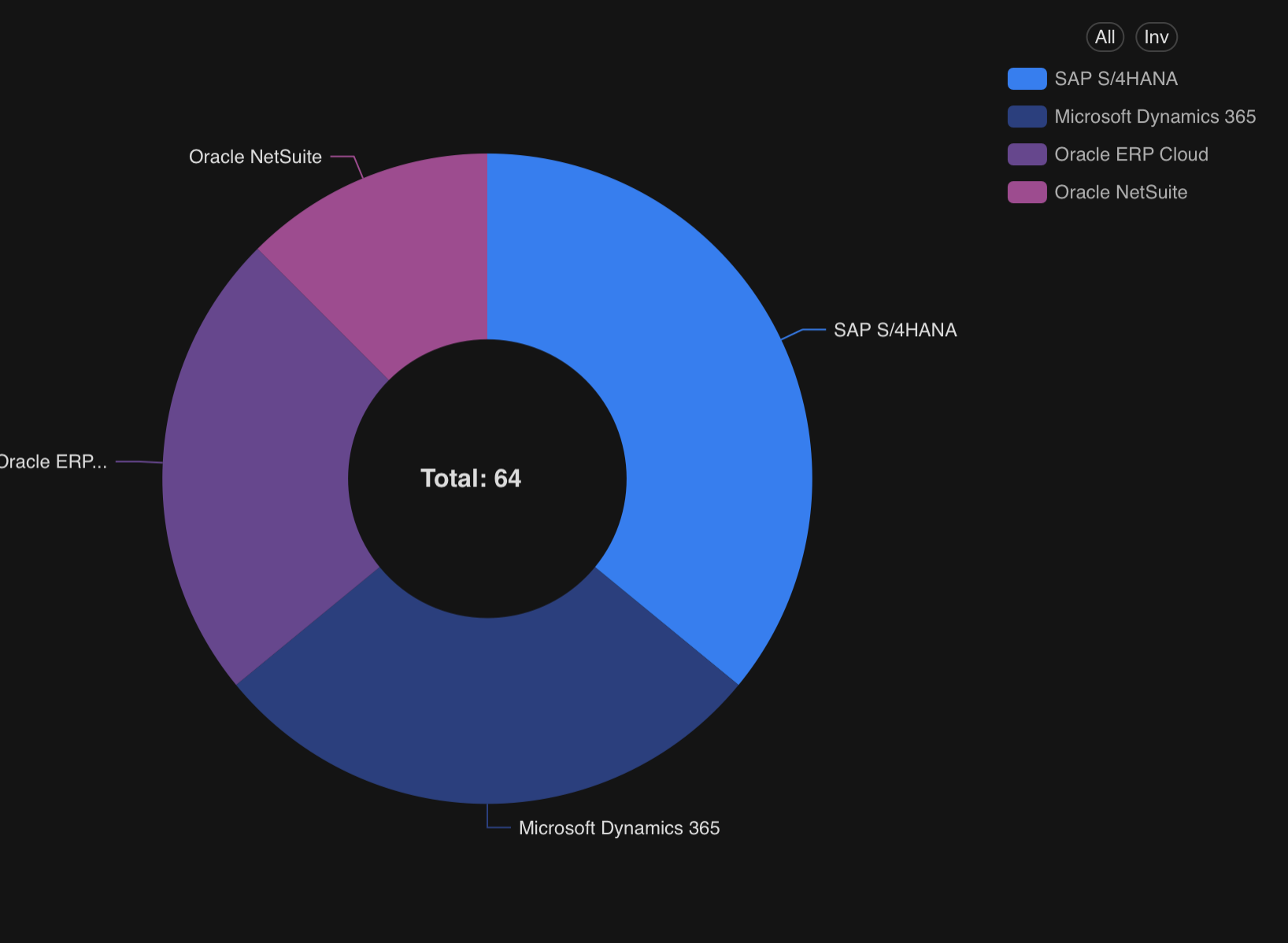
ERP Market Share

The enterprise ERP market is dominated by a few global vendors, with SAP maintaining one of the largest market shares among large enterprises. Organizations across industries rely on SAP to manage core business processes including finance, supply chain, manufacturing, procurement, and customer operations.

The transition from SAP ECC to SAP S/4HANA represents one of the most significant ERP transformations in modern enterprise IT.

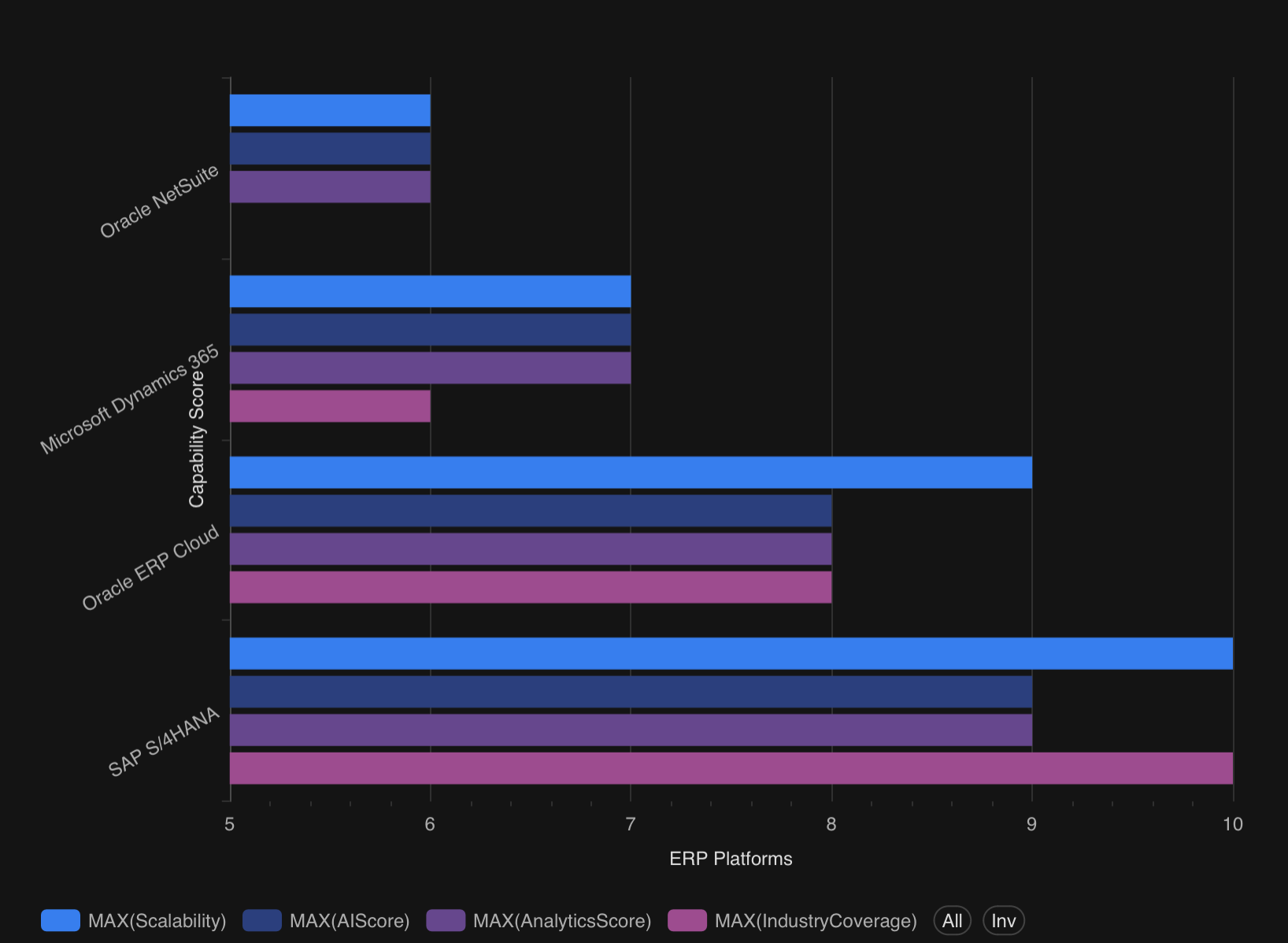
ERP Capability Comparison

Modern ERP platforms are evaluated across scalability, analytics capabilities, integration flexibility, automation support, and cloud readiness.

SAP S/4HANA consistently ranks among the most comprehensive enterprise platforms due to its integrated architecture, embedded analytics, and deep process integration across business functions.

What is Minimum S/4HANA?

Minimum S/4HANA refers to the foundational deployment of SAP S/4HANA capabilities required for organizations to transition from legacy ERP environments.

This typically includes: • Core Finance (Universal Journal) • Simplified data models • Embedded analytics • Real-time reporting capabilities • Basic automation of business processes Organizations can later extend these capabilities with advanced modules such as digital supply chain, AI automation, predictive analytics, and industry-specific solutions.

Phase 01

ERP Landscape Assessment

Organizations begin their S/4HANA journey by assessing their existing SAP landscape. This includes analyzing custom developments, system integrations, data complexity, and infrastructure readiness. This phase establishes a clear transformation roadmap.

Phase 02

System Transformation

Organizations migrate from SAP ECC to SAP S/4HANA using approaches such as system conversion, landscape transformation, or greenfield implementation. This phase includes data migration, process redesign, and infrastructure upgrades.

Phase 03

Intelligent Enterprise Optimization

Once S/4HANA is deployed, organizations unlock advanced capabilities including AI-driven automation, predictive analytics, digital supply chains, and integrated enterprise planning. This phase maximizes business value from the S/4HANA digital core.

What’s Slowing Down S/4HANA Transformations?

While SAP S/4HANA promises real-time analytics, simplified architecture, and intelligent automation, many organizations struggle to begin or accelerate their transformation journey. The challenges are not purely technical — they involve strategy, governance, and organizational readiness.

Migration Complexity

Transitioning from legacy SAP ECC systems to S/4HANA requires careful planning around data conversion, custom code remediation, system integration, and infrastructure modernization. Without a structured migration roadmap, organizations risk delays and operational disruption.

Legacy Customizations

Many SAP environments contain years of custom developments built to support unique business processes. During an S/4HANA transformation, these customizations must be analyzed, simplified, or redesigned to align with the new digital core architecture.

Data Volume & System Readiness

Large volumes of historical transactional data stored in legacy systems can significantly increase migration complexity. Organizations often need data archiving and system optimization before beginning the S/4HANA transition.

Skills & Change Management

S/4HANA introduces new technologies, user interfaces, and intelligent automation capabilities. Organizations must invest in training, governance models, and change management programs to ensure successful adoption.
Unlocking the
Potential of Those
Who Advance the
World

How can we assist you?

We value the opportunity to connect with you. Please submit your inquiries and feedback, and our experienced professionals are ready to assist you.

QubitX Intelligence is an Equal Opportunity Employer. All qualified applicants and partners will receive consideration without regard to race, color, age, religion, gender, sexual orientation, gender identity or expression, national origin, disability, or any other characteristic protected under applicable laws.